Indigenous rights and governance instruments in the Amazon: Workshop executive analysis
Share this content
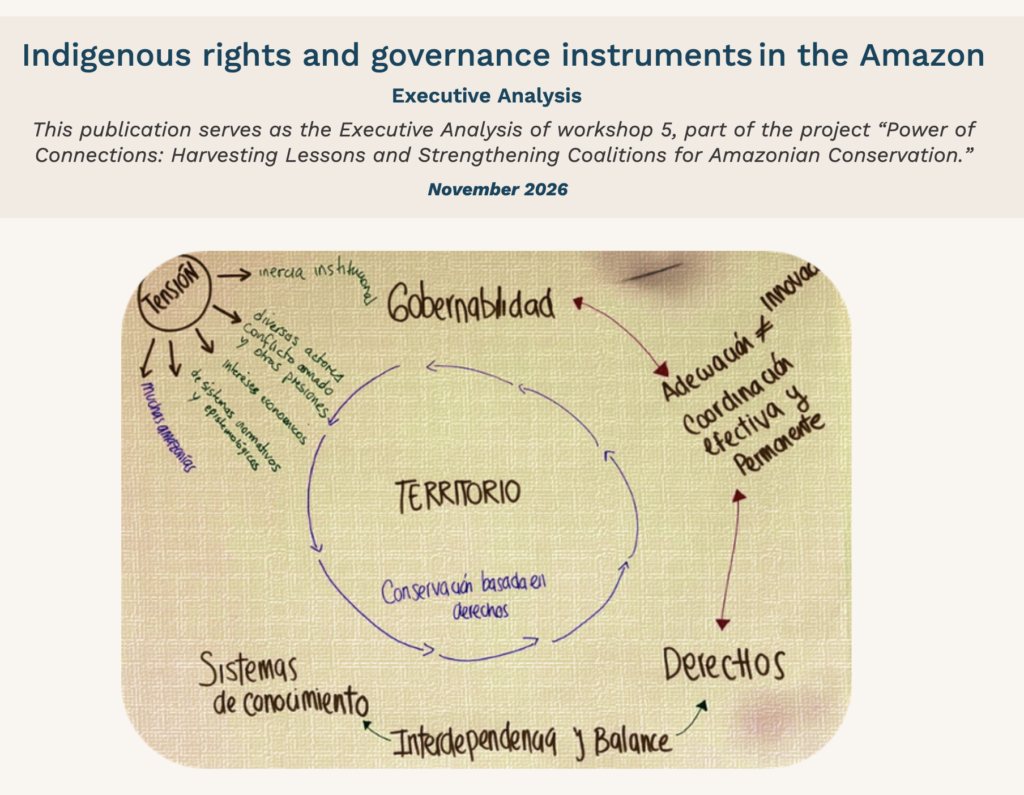
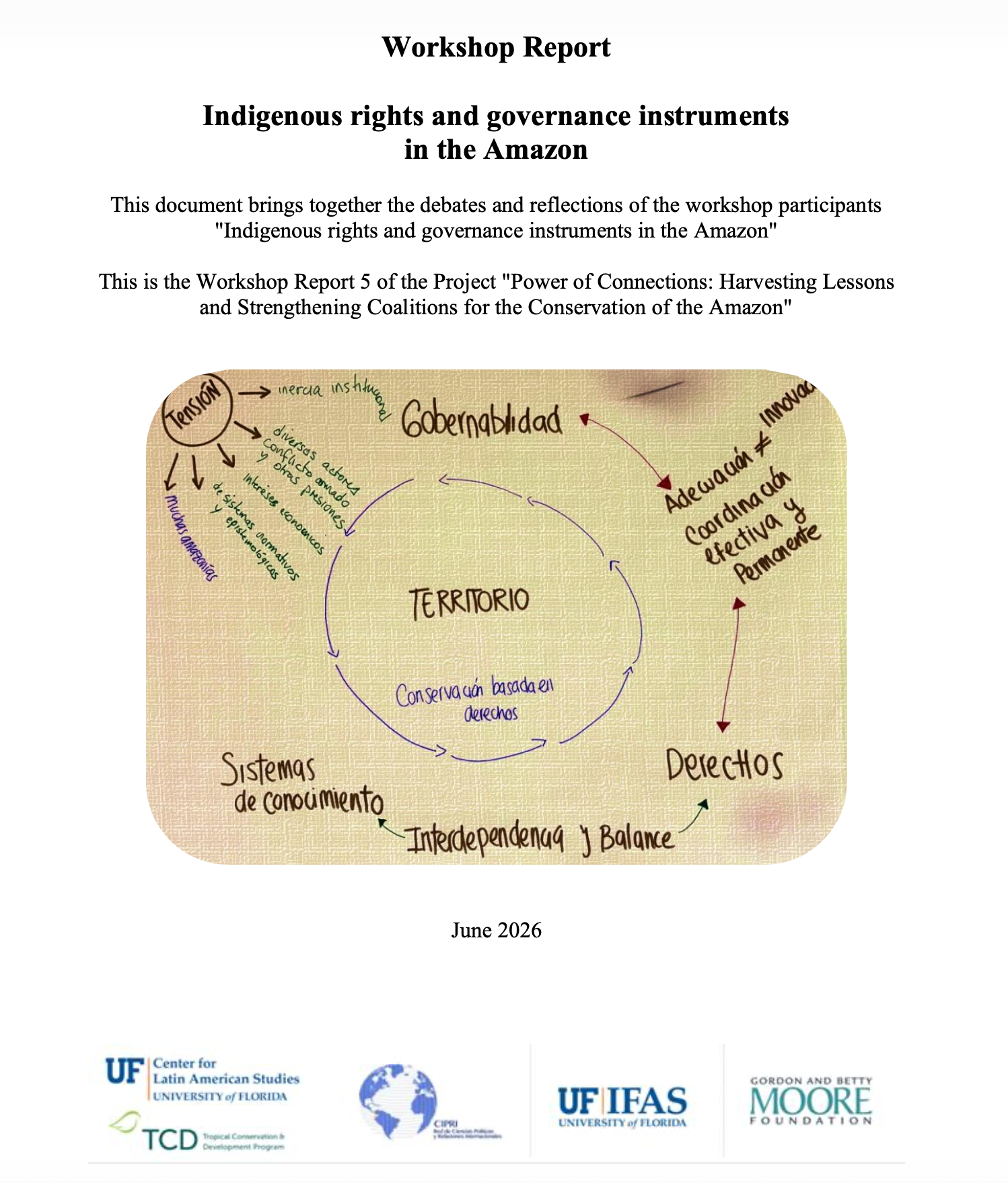
This document brings together the debates and reflections of the participants of the workshop “Indigenous Rights and Governance Instruments in the Amazon” held from January 26 to 29, 2026, in San Patricio, Quito, Ecuador.
Key messages:
State ownership of natural resources remains a key structural constraint on Indigenous self-determination.
A principal Indigenous rights challenge is not the absence of legal recognition, but the gap between legal recognition and on-the-ground implementation.
Legal pluralism, an institutional architecture with intersecting and coordinated legal jurisdictions, is evolving from constitutional principle to governance practice.
Free, Prior and Informed Consent remains procedurally recognized but politically constrained.
Convergence between Indigenous rights and rights of nature reflects Indigenous worldviews and could transform conservation practice.
Regional exchanges, mutual learning, and cross-country analyses reveal multiple institutional pathways for advancing Indigenous governance.