The regional workshop “Innovations in the Research Process” will spotlight innovative, replicable research tools and methodologies designed to advance equity, capacity building, and effective conservation outcomes across the Amazon Basin.
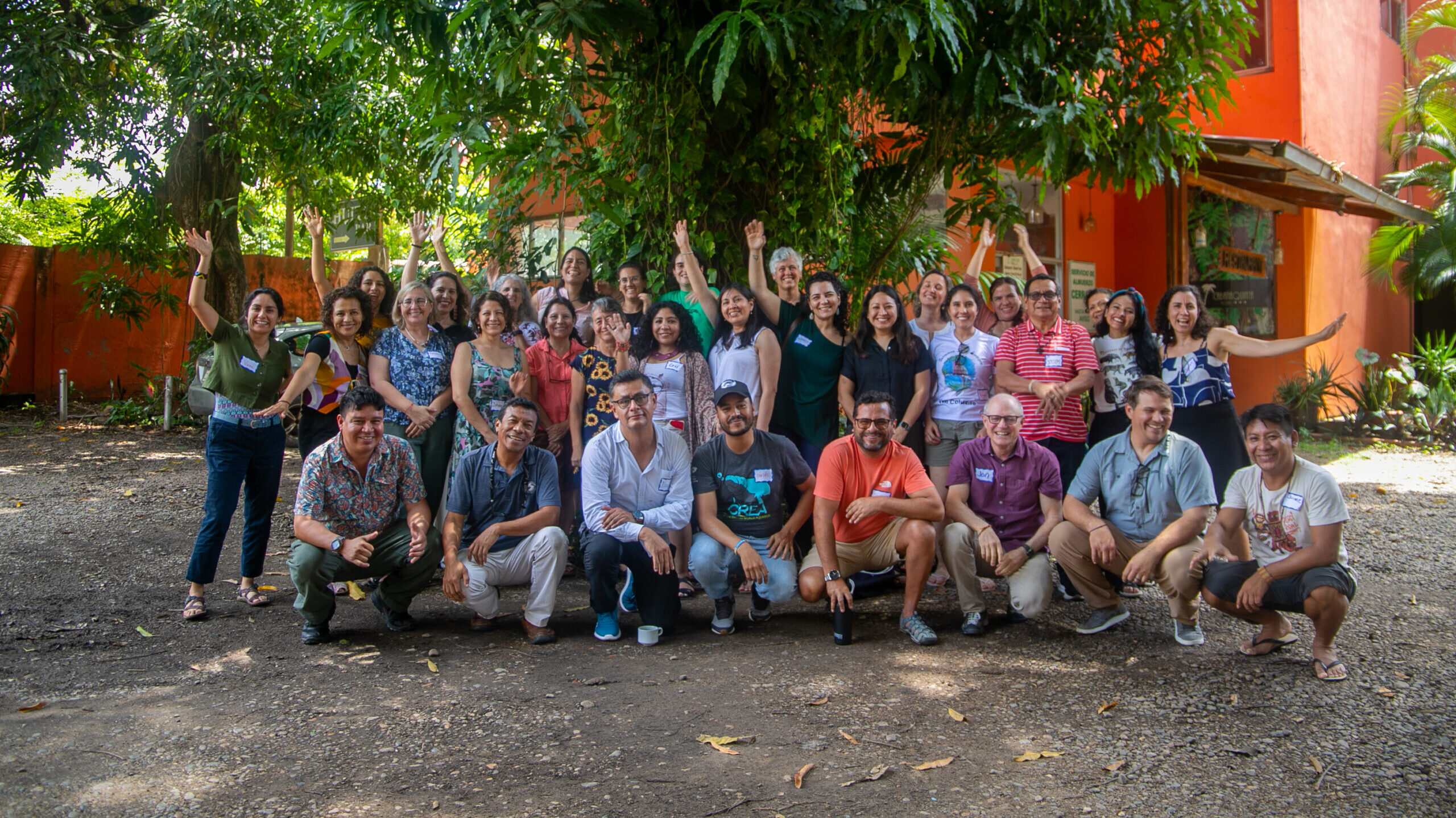
PUERTO MALDONADO, PERU, Dec. 8-11, 2025: leading conservation practitioners, researchers, Indigenous knowledge holders, and social scientists from across the Amazon Basin will come together for a three-day regional workshop co-organized by the University of Florida’s Tropical Conservation and Development Program (UF TCD) and the Asociación para la Conservación de la Cuenca Amazónica (ACCA). The gathering seeks to transform how knowledge is produced, shared, and applied to biocultural conservation to protect one of the world’s most vital and socially diverse regions.
At a time when the Amazon faces accelerating environmental pressures and complex socio-political challenges, the workshop will offer a dedicated space for reflection and collaboration. Over three days, participants will examine research practices through a critical and forward-looking lens. This includes exploring how scientific methodologies can evolve to become more inclusive, participatory, and aligned with local community priorities. Discussions, hands-on sessions, and collaborative visioning exercises will reimagine the research process from conception to application, generating tools and approaches that support more effective and equitable conservation outcomes.
With the goal of fostering Pan-Amazon networks to bridge scientific, social and Indigenous knowledge, this workshop brings together actors whose independent contributions are fundamental to the future of the region but rarely share the same table. By accelerating new approaches to collaboration that recognize the Amazon as a space where multiple knowledge systems coexist and documenting lessons learned and replicable strategies, participants will leave with practical approaches that can be applied across diverse ecological and cultural contexts.
“Conducting research ethically and inclusively in the Amazon is not just a methodological choice, it’s a responsibility,” says Dr. Myrian Barbosa, Universidade Federal do Oeste do Pará (UFOPA). “Researchers enter territories shaped by generations of Indigenous and traditional knowledge, so engagement must be rooted in respect, reciprocity, and transparency. Inclusive approaches strengthen collaboration, respond to community priorities, and enhance both the relevance and effectiveness of research.”
Dr. Marisol Toledo of the Universidad Autónoma Gabriel René Moreno (UAGRM) emphasizes the role of collaboration in innovation: “Integrating the diverse knowledge of Indigenous peoples and local communities with scientific expertise allows us to design truly participatory projects.”
Corine Vriesendorp, Science Director at ACCA, notes, “Gathering people from different knowledge systems and areas of expertise helps us build a holistic vision of the Amazon. Collaboration strengthens networks, fosters trust, and creates partnerships that can transform conservation strategies and support sustainable governance across the Basin.”
The workshop will also focus on long-term impact, including capacity-building and career pathways for young people from Amazonian communities. “These partnerships create lasting bridges of hope, ensuring continuity of high-quality, locally grounded research while offering meaningful opportunities for the next generation,” Dr. Barbosa adds.
By the workshop’s conclusion, participants will leave Puerto Maldonado with a shared sense of purpose, a toolkit of replicable research methods and approaches, and stronger regional networks, all poised to advance evidence-based, socially grounded conservation across the Amazon basin. The workshop marks a step forward in shaping a more integrated, just, and impactful model of knowledge production for the region’s future.
This initiative is part of the Power of Connections project, supported by the Gordon and Betty Moore Foundation through Grant GBMF13270. For more information, visit https://amazonconservationconnections.com/, our Instagram and YouTube Channel .
About the Tropical Conservation and Development (TCD) Program
The mission of the Tropical Conservation and Development (TCD) Program is to connect theory and practice to promote biodiversity conservation, sustainable natural resource use, and human well-being in the tropics and beyond. TCD is a research and training program of the Center for Latin American Studies at the University of Florida, with 10 core faculty members and approximately 100 affiliated professors. The program has a long history of collaboration with partner organizations in the Amazon and of supporting networks of conservation professionals committed to sustainable development.
About the Gordon and Betty Moore Foundation
The Gordon and Betty Moore Foundation promotes scientific discovery, environmental conservation, and the special character of the San Francisco Bay Area. Since 2001, its Andes-Amazon Initiative has helped conserve more than 400 million hectares in the Amazon. By 2031, the initiative aims to ensure that 70 percent of the Amazon biome (forest cover) and the freshwater ecosystems that sustain it are under effective management and conservation.