Community leaders, researchers, and Indigenous representatives gather to assess and develop governance-based conservation strategies
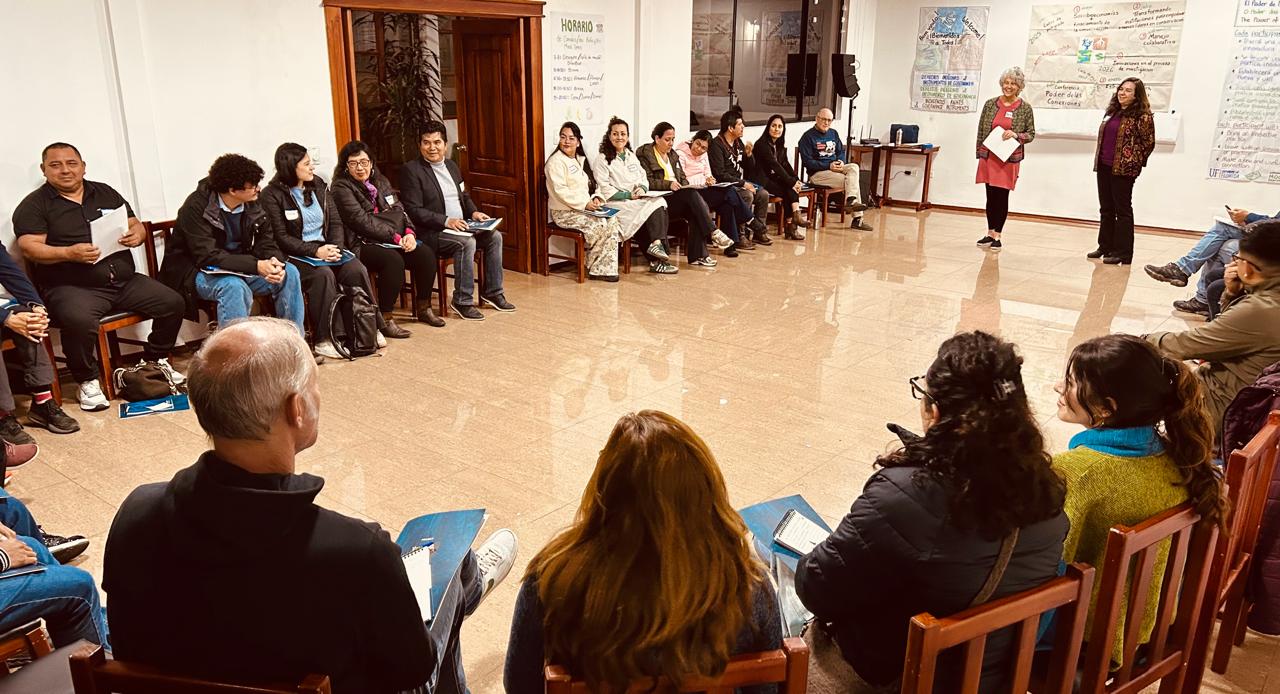
From January 26-29, 2026, participants from across the Amazon region are meeting in Quito, Ecuador to culminate a series of workshops to collaboratively identify and examine significant Amazonian conservation achievements, challenges and future opportunities.
The Quito workshop centers on the topic of how governance, laws and policies impact the life, territories, and rights in the Amazon. The workshop participants seek to identify replicable strategies that will strengthen Pan Amazonian conservation, while including the rights and self-determination of the Indigenous Peoples who live in the region. “Bringing people together to reflect about governance in the Amazon is crucial because evaluating legal frameworks and public policies can help to support more just decisions and effective ways to protect the land, forests, and the lives of Indigenous and local communities who depend on this region,” says environmental sociologist Dr. Johanna Espin, who will lead the workshop. “The Amazon region hosts immense natural and cultural capital. Because of this, many initiatives have been implemented to protect the Amazon forest, its ecosystems, and Indigenous peoples who live there. In this context, identifying lessons learned about legal strategies used to protect the Amazon is essential to inform and replicate effective approaches that leverage governance instruments to strengthen conservation efforts.”
As with the previous Pan-Amazon workshops, the Quito workshop brings together scientists, Indigenous and community leaders, policymakers, civil society organizations, and representatives from government agencies all working to advance Amazonian conservation.
With a diversity of expertise in dialogue, the workshops bridge the gaps between sectors and nations and create opportunities for sharing knowledge, strengthening coalitions, and innovating strategies.
Beginning in May 2025, the four previous workshops addressed joining local knowledge with scientific research (Puerto Maldonado, Peru), collaborative management strategies (Manaus, Brazil), youth leadership development (Santa Cruz de la Sierra, Bolivia), and strengthening conservation finance and economic models that promote biodiversity conservation, human well-being, and fair income generation (Nazaré Paulista, Brazil).
These efforts are part of the project “The Power of Connections: Harvesting Lessons and Strengthening Coalitions for Amazonian Conservation.” The project is funded by the Gordon and Betty Moore Foundation and led by a team of conservation practitioners at the Tropical Conservation and Development (TCD) Program at the University of Florida’s Center for Latin American Studies.
One month after the Quito workshop concludes, many participants will reunite for the Amazon Summit in Gainesville, Florida, hosted by the University of Florida from February 22-27, 2026. Across public talks, discussion forums, and conservation training clinics, the summit will build on the insights gained in the five workshops and disseminate them to the wider public.
“What makes this project powerful is its focus on connection, between places, people, and experiences that are often fragmented across the Amazon,” says Dr. Maria DiGiano, Moore Program Officer and UF-TCD alumnus. “By linking insights across governance, rights, and conservation efforts, it helps turn individual experiences into shared learning that can inform more durable and just approaches to protecting the Amazon.”
Follow along with The Power of Connections project: https://amazonconservationconnections.com/
About the Tropical Conservation and Development (TCD) Program
The mission of the Tropical Conservation and Development (TCD) Program is to connect theory and practice to promote biodiversity conservation, sustainable natural resource use, and human well-being in the tropics and beyond. TCD is a research and training program of the Center for Latin American Studies at the University of Florida, with 10 core faculty members and approximately 100 affiliated professors. The program has a long history of collaboration with partner organizations in the Amazon and of supporting networks of conservation professionals committed to sustainable development.
About the Gordon and Betty Moore Foundation
The Gordon and Betty Moore Foundation promotes scientific discovery, environmental conservation, and the special character of the San Francisco Bay Area. Since 2001, its Andes-Amazon Initiative has helped conserve more than 400 million hectares in the Amazon. By 2031, the initiative aims to ensure that 70 percent of the Amazon biome (forest cover) and the freshwater ecosystems that sustain it are under effective management and conservation.
(Written in collaboration with Christa Markley. Picture: Fabian Pinto)