Workshop 'Sociobioeconomies and conservation finance in the Amazon'
The Power of Connections Project: Harvesting Lessons and Strengthening Coalitions for Amazonian Conservation
Organizers and collaborators





The workshop
- Created space for key conservation actors to exchange experiences and lessons-learned;
- Took place at IPÊ (Ecological Research Institute), from May 28 to 31, 2025;
- Led by the Tropical Conservation and Development Program and suppoterd by the Gordon and Betty Moore Foundation;
- Claudio Valladares-Padua (IPÊ), Trent Blare (International Potato Center), and Pilar Useche (UF/IFAS) were key intellectual leaders.
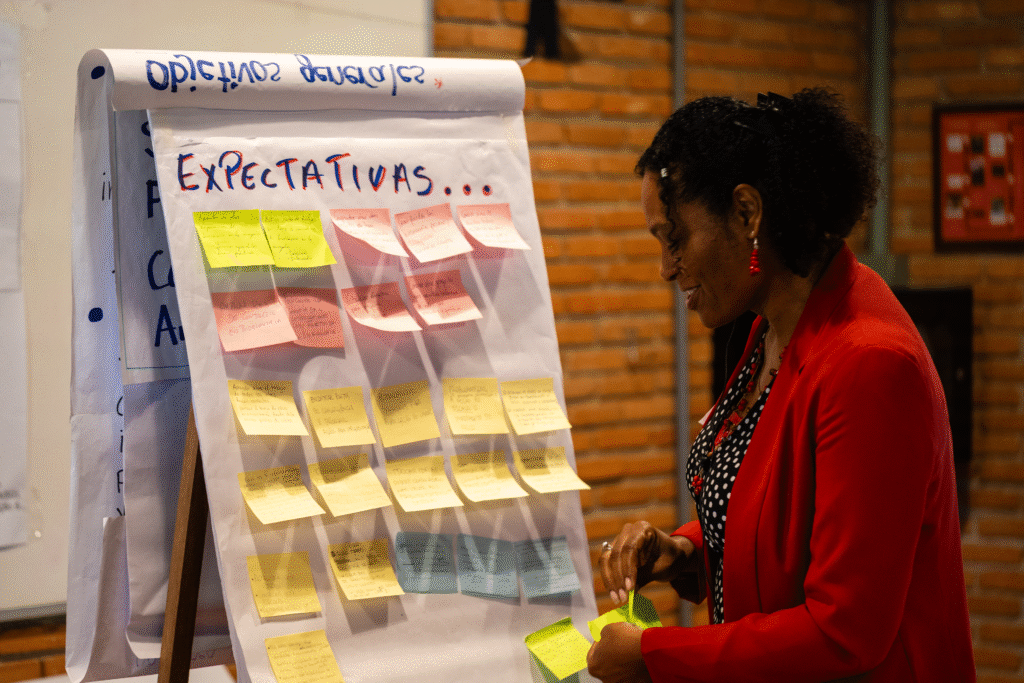
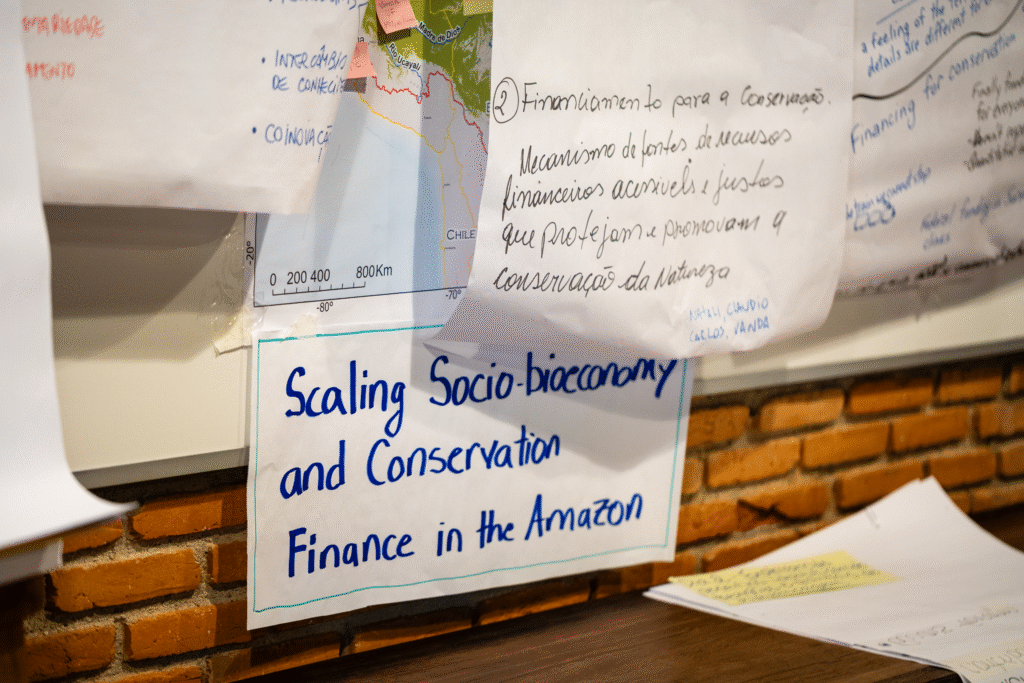
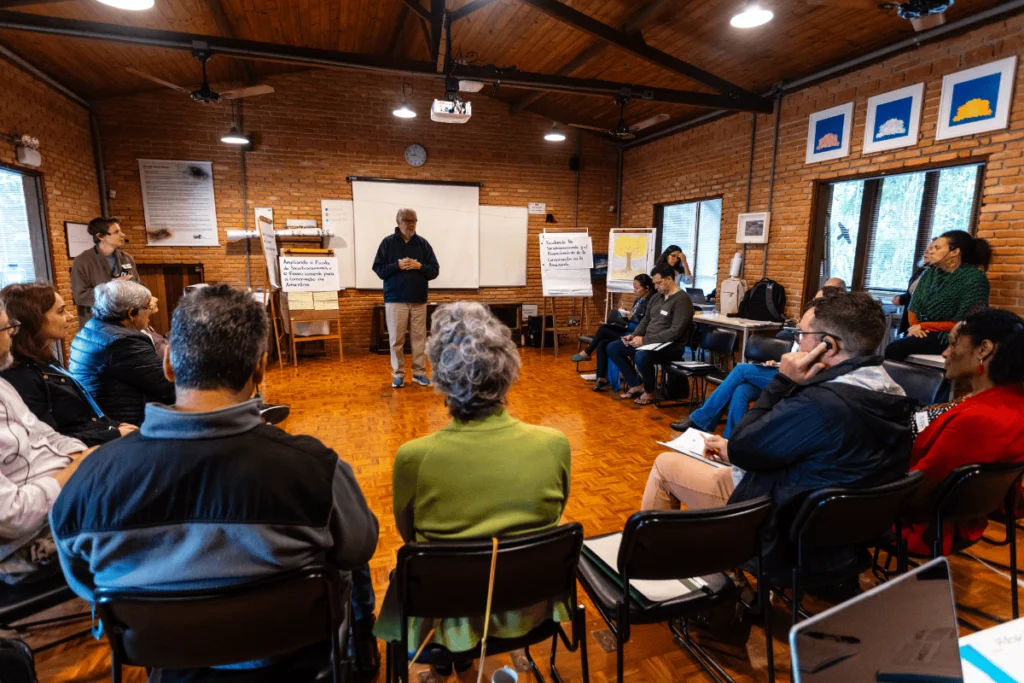
Overall goals were:
- To share practical experiences and lessons from innovative sociobieconomies and conservation finance initiatives;
- To strengthen and spark networks — including cross-generational — to transform sociobieconomies and conservation finance in the Amazon;
- To create space for participants to bring ideas, gain knowledge, and connect around an innovative idea.
Day 1 – Grounding & Connecting: “Shared Understanding of the Amazonian Sociobioeconomies and Conservation Finance”
Day 2 – Exploring Experiences & Challenges: “Identifying Tensions and Leverage Points”
Day 3 – Identifying Strategies: “Scalable, Ethical, and Inclusive Approaches”
Day 4 – Moving from Insights to Actions: “Harvesting Lessons and Workshop Wrap-up.
This is the first in a series of events focused on Amazonian experiences exploring innovative conservation and sustainable development strategies in the region."
Dr. Pilar Useche, professor of Food and Resource Economics and Latin American Studies at the University of Florida, and a ‘Power of Connections’ project coordinator.
We aimed to encourage the creation of a new economy within local communities, so that people can earn income honestly and sustainably without destroying biodiversity."
Cláudio Pádua, co-founder of IPÊ, ESCAS dean, one of two thematic leaders.
I describe this workshop as an important mechanism for strengthening relationships with people and institutions that are seeking to build a new economy—an economy capable of recognizing our territories. Especially for women, these spaces are extremely important to highlight their presence and their voices. Strengthening an economy focused on women is a vital path to bringing dignity to them, as their actions have a collective impact on the territories where they live and within their organizations."
Vanda Witoto, Executive Director of Witoto Institute, in Brazil.
This was a diverse group of creative leaders from five Amazonian countries sharing their hard-won wisdom and demonstrating their unwavering commitment to catalyze enduring sociobieconomies."
Karen Kainer, professor at the University of Florida, and a ‘Power of Connections’ project coordinator.
Participants insights
Together, participants have reflected on the following key take messages:
- The Amazon’s cultural and knowledge diversity drives the shift from a linear economy to models that value socio-biodiversity. This transition fosters lasting positive impacts for both people and the planet.
- Promote financing that values nature and local communities, enabling responsible and resilient economic pathways. This requires addressing social inclusion gaps through stronger dialogue among communities, investors, researchers, and governments.
- SocioBioeconomies must be environmentally responsible, socially and financially fair, and inclusive across genders and generations. At the same time, they should generate returns comparable to or greater than the conventional economy.
I think it’s very important that we can find how to continue in these dialogues and maybe form more formal networks to be able to work together. Alone, it’s very hard. No one knows how to do everything, so we must contribute with what we know and let ourselves be guided by those who know and have other knowledge."
The Amazon is one, and therefore, it has challenges that are similar, but at the same time, each territory has a unique characteristic, and I believe that by exchanging ideas we can find solutions to those challenges with a shared vision."
This workshop is the first of five distinct thematic workshops implemented in 2025-26 in the Amazon Basin under the Power of Connections project.
In a context of constant and unpredictable change in Amazonia, the Power of Connections project builds on pragmatic conservation insights from Pan-Amazonian Indigenous elders and youth, the private sector, researchers, funders, government officials, and legal practitioners. The project provides platforms and processes to share what has been working to consolidate and expand protections for Amazonian lands and people. Leveraging their collective intelligence and using their hard-won knowledge and coalitions, participants address the basin’s most pressing challenges and in ways that honor territorial and cultural integrity and foster pragmatic synergies between ancestral wisdom and contemporary contexts.
The Power of Connections Project is led by the Tropical Conservation and Development Program (TCD) within the Center for Latin American Studies at the University of Florida (UF). TCD is proud to partner with the Gordon and Betty Moore Foundation who has funded this project and website.
Questions and Comments
Contact us
Contact: tcd@latam.ufl.edu
Website: https://amazonconservationconnections.com/
Photos credits:
@ana_violato_espada
@antonioloboguerrero
@gabbyrsalazar
@leandrocagiano