Workshop 'Reshaping institutions for the next generation of leaders in Amazon conservation'
The Power of Connections Project: Harvesting Lessons and Strengthening Coalitions for Amazonian Conservation
Organizers, Collaborator and Partner


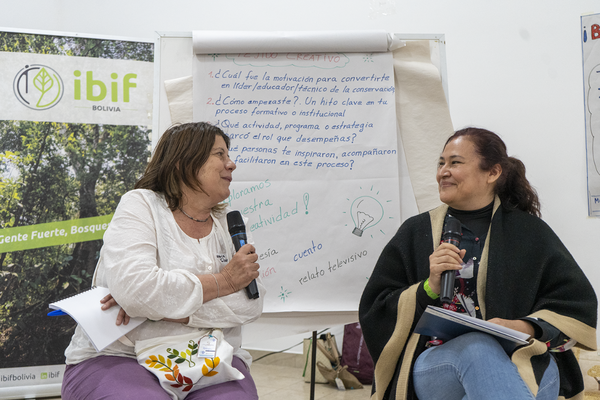
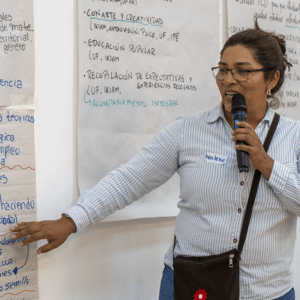
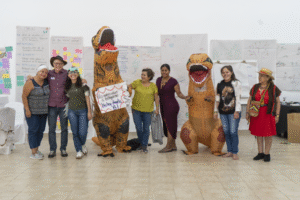
The workshop
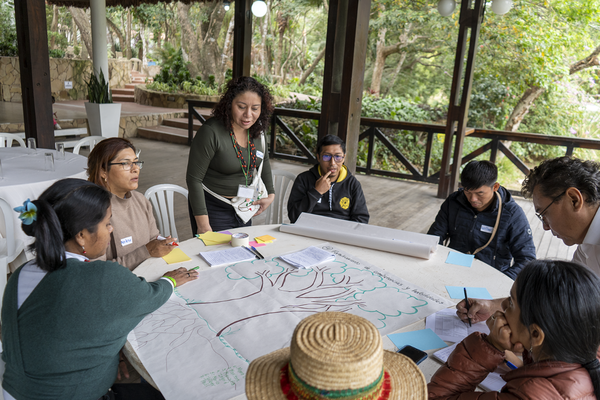
- Created space for key conservation actors to exchange experiences and lessons learned;
- Took place at Santa Cruz de La Sierra, from July 29 to 31, 2025;
- Led by the Tropical Conservation and Development Program and supported by the Gordon and Betty Moore Foundation;
- Hosted by Bolivian Forest Research Institute (IBIF) in partnership with the Naturae Center of the Pontifical Catholic University of Ecuador (PUCE);
- Marlene Soriano (IBIF Bolivia) and Maria Fernanda Checa (PUCE) were key intellectual leaders.


Overall goals were:
- Build a community to support new leaders in the Amazon.
- Share effective experiences of educational initiatives (territorialized, Indigenous, professional development, elementary school, universities) that could be replicated in other territories and localities in the Amazon.
- Strengthen connections between educators, civil society organizations, and young leaders from different countries and Amazonian contexts, fostering lasting collaborations.
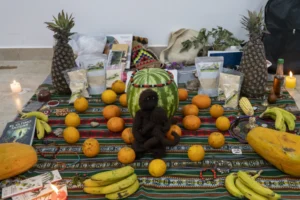
Day 1 – Community building
Day 2 – Presentation of innovative experiences and approaches
Day 3 – Summary and next steps
The current deepening of the socio-economic and environmental crisis requires innovative and democratic solutions that emerge from a true dialogue of knowledge that fosters collaboration among institutions, communities, and individuals for the development of new leaders.”
María Fernanda Checa, Director, Naturae Research Center at PUCE, and workshop thematic leader.
From Peru, through my organization Bari Wesna, we have been working in a community where youth migration to the cities has had impacts on both knowledge and language. We have focused on offering workshops to help recover history and to share other forms of knowledge as well. We have always provided workshops that use a positive-language approach, with teachers and academics who teach the language, the use of medicinal plants, weaving tools, the making of pottery and textiles. We have been implementing these activities since 2021, I recall, after the pandemic.”
Susy Díaz Gonzales, Executive Director, Intercultural Association Bari Wesna
Participants insights
Together, participants have reflected on the following key take-home messages:
- Family members, peers, teachers, and trainers personally awakened young leaders to engage in biocultural conservation.
- Strategic, well-organized, targeted activities and events gradually motivated active youth engagement.
- Key competencies are still scarce in youth training programs, including effective communication, active listening, conflict management, and project design.
- Capitalizing on artistic expression and learning by playing, innovative approaches are disrupting conventional education paradigms.
- Higher education is a major challenge, but standout policies and institutions have closed access and retention gaps.
- While not universal, gendered roles are changing, disrupting women’s traditional choice between ‘marriage and leadership’.
- Adolescent pregnancies and young motherhood still serve as educational and leadership barriers, but family and institutional support help navigate this hurdle.
At Tropembos Colombia, we have developed territorial educational projects. We work with teachers and schools to create initiatives that are connected to the territory and explore all the possibilities it offers: its natural, human, and knowledge resources, as well as the different spaces available. We support them so that these projects become consolidated, are included in institutional documents, and eventually are integrated into the curriculum as a meaningful contribution."
María Clara van der Hammen, Project Director, Tropenbos Colombia
Within the Bolivian Platform for Action on Climate Change, of which I am a member, we have two important programs aimed at a very diverse audience. These two initiatives are called the School Against Climate Illiteracy and the School of Climate Influencers. In both cases, the main focus is on transforming the narratives around climate change: discussing the issue using more innovative, accessible language with greater reach. We seek to involve a wide range of actors—decision-makers, youth, students, homemakers, farmers, producers, and people from both rural and urban areas—to build a shared and active understanding of climate challenges.’
Miguel Ángel Jerez Pereira, Environmental Specialist, ORE NGO, and activist with the Bolivian Platform for Action on Climate Change (PBACC).
Youth today are more mobilized than ever through collaborative networks and are finding new ways to participate and contribute to the defense of their territories. Our motivation was to create a genuine space for exchange and reflection to reassess how, from our institutions, we support Amazonian youth.”
Marlene Soriano Candia, Director, Inclusive Socioeconomic Development Program at IBIF and workshop thematic leader.
This workshop is part of the Power of Connections project that is promoting regional workshops in various Pan-Amazonian countries.
- Establish full-circle learning through iterative events for conservationists;
- Analyze key themes with a focus on challenges, successes, and opportunities;
- Highlight people-focused conservation approaches often missed in leadership training;
- Foster cross-generational learning and coalition-building for stronger impacts.
The Power of Connections Project is led by the Tropical Conservation and Development Program (TCD) within the Center for Latin American Studies at the University of Florida (UF). TCD is proud to partner with the Gordon and Betty Moore Foundation who has funded this project and website.
Questions and Comments
Contact us
Contact: tcd@latam.ufl.edu
Website: https://amazonconservationconnections.com/
Photos credits:
@gabbyrsalazar
@MiguelManchegoChavez