Workshop ‘Innovations in the research process in the Amazon’
The Power of Connections Project: Harvesting Lessons and Strengthening Coalitions for Amazonian Conservation
Organizers and collaborators

The workshop
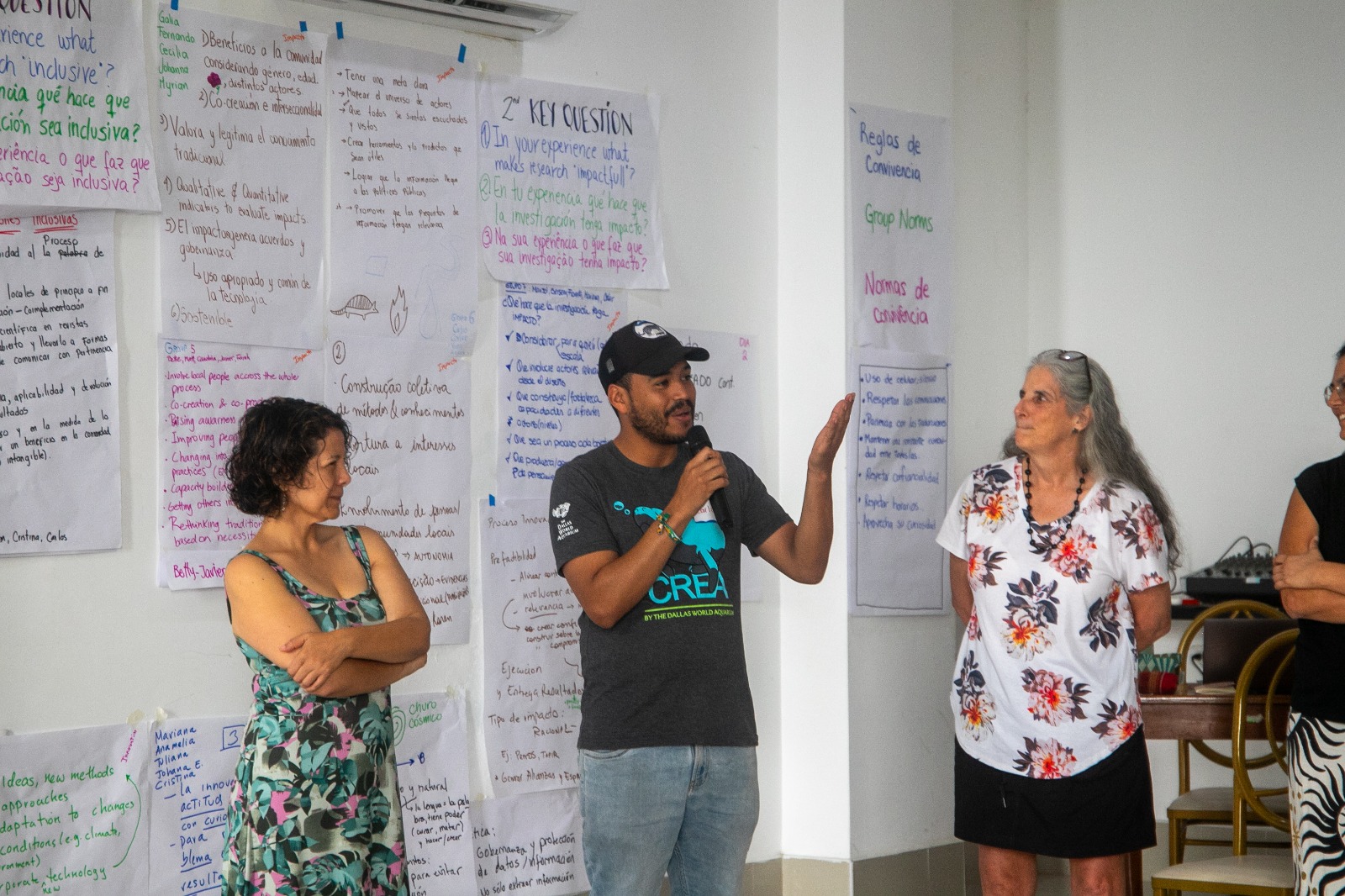
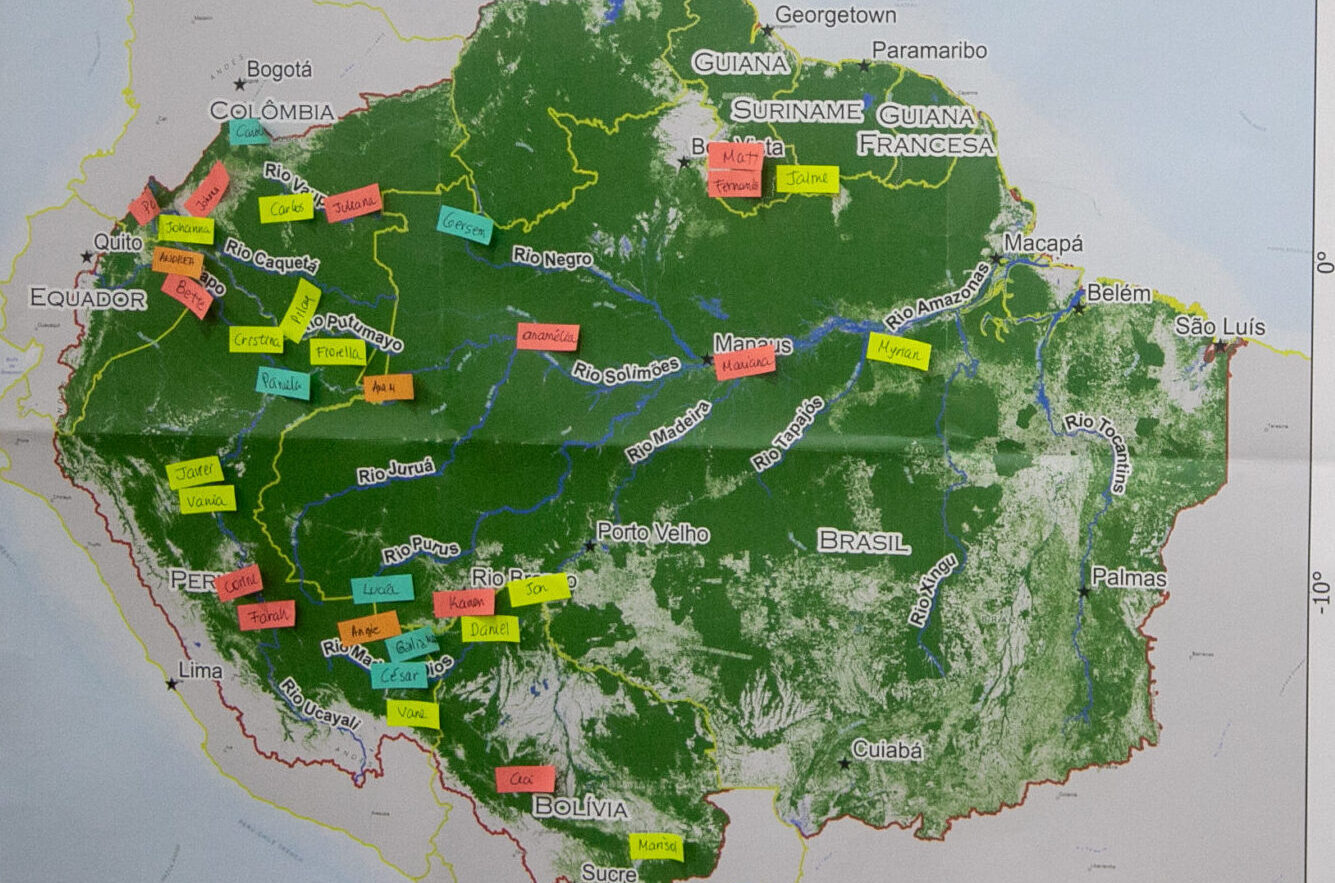
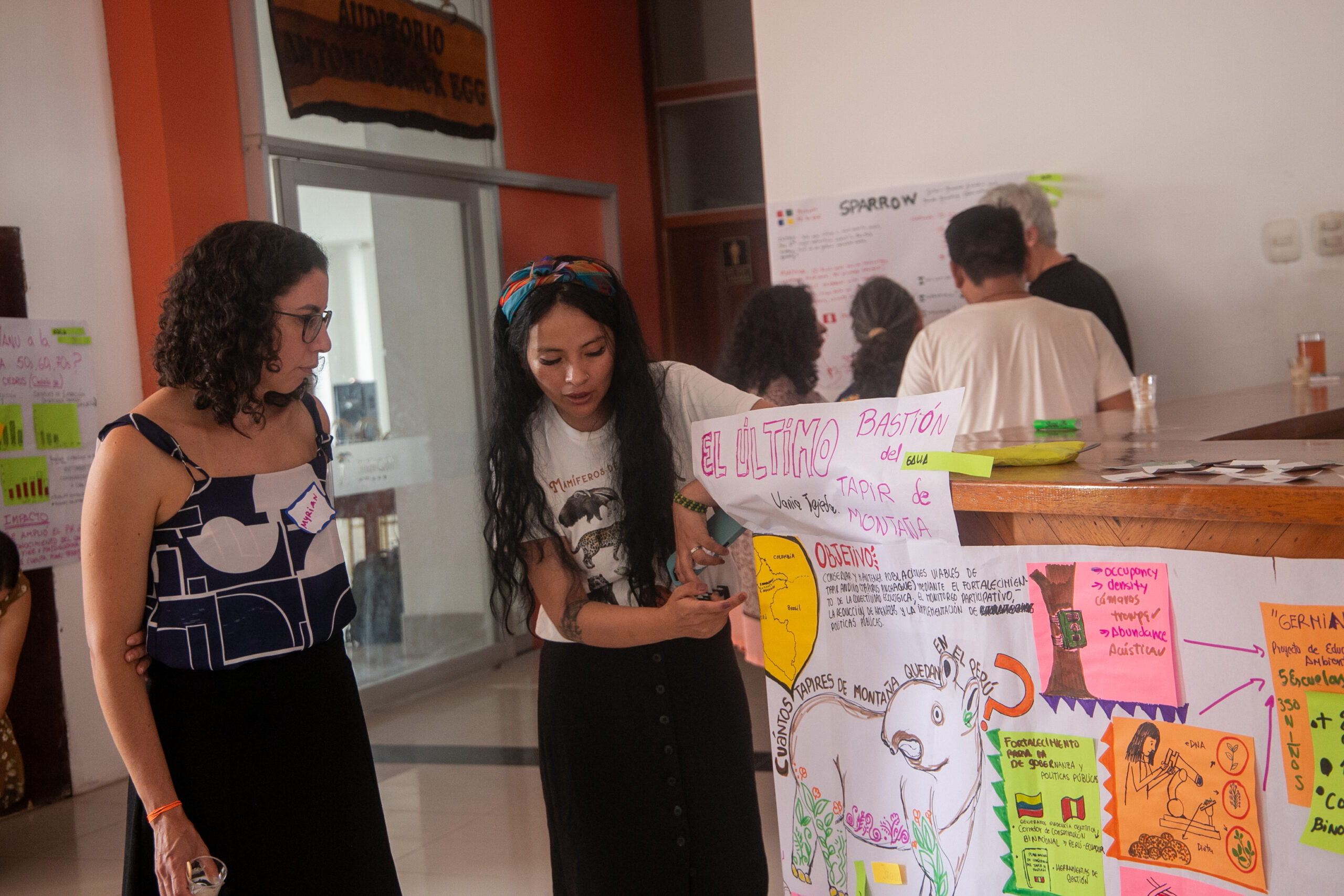
- Over 4 days, 23 workshop participants from 7 countries gathered to exchange innovative research and lessons learned from their experiences;
- Held in Puerto Maldonado, Peru from December 8 to 11, 2025;
- Organized by the UF Tropical Conservation and Development Program and the Association for the Conservation of the Amazon Basin (ACCA) with support from the Gordon and Betty Moore Foundation;
- Marisol Toledo (Gabriel René Moreno Autonomous University, Bolivia) and Myrian Sá Leitão Barboza (Brazilian Ministry of the Environment) were the principle intellectual leaders.
Workshop objectives
- Create community among participants.
- Advance the thinking on innovations in the research process in Amazonia.
- Exchange experiences, methods/tools, lessons learned, and successes.
- Discuss best ethical practices.
- Discuss and plan next steps.
Day 1 – Build community
Day 2 – Understand context, establish common foundations of key concepts (Innovation, Impact, Inclusivity), and prepare to share experiences
Day 3 – Share experiences and innovative approaches and discuss ethical considerations
Day 4 – Discuss lessons learned, potential products, and collective next steps
I contributed as the thematic leader of the workshop, bringing both my academic and personal experiences. We discussed the theme of innovation in research, exploring it not only from environmental and ecological perspectives but also through a more anthropological and sociocultural lens. The goal was to promote a multidisciplinary approach that brings together diverse forms of knowledge."
Myrian Sá Leitão Barboza.
Project Manager, Brazilian Ministry of Environment and Climate Change
This workshop was very meaningful for me as a research professor in Bolivia, as it allowed me to connect with other institutions and professionals, and to stay updated on the different tools, methods, and approaches currently being implemented across Amazonian countries."
Marisol Toledo
Professor, Gabriel René Moreno Autonomous
It was a space for rich exchange and learning. It also helped us recognize how we share similar realities, while facing different challenges and making progress in different ways. What truly strengthens and consolidates our work is the opportunity to learn from the experiences emerging in other contexts and countries."
Gersem dos Santos Luciano
One of the Baniwa People and Anthropology professor, University of Brasilia
I liked the most about this workshop the way it was facilitated and meeting new people and hearing about the work they do. I want to think that I brought innovative ideas not only because of me coming from Guyana, but also because I am an Indigenous person who lives and do research in Indigenous lands."
Fernando Li
Co-founder, Rupununi Wildlife Research Unit
Participants insights
Together, participants have reflected on the following key take messages:
- The Amazon’s cultural and knowledge diversity drives the shift from a linear economy to models that value socio-biodiversity. This transition fosters lasting positive impacts for both people and the planet.
- Promote financing that values nature and local communities, enabling responsible and resilient economic pathways. This requires addressing social inclusion gaps through stronger dialogue among communities, investors, researchers, and governments.
- SocioBioeconomies must be environmentally responsible, socially and financially fair, and inclusive across genders and generations. At the same time, they should generate returns comparable to or greater than the conventional economy.
I thought the meeting was fantastic. It was a great opportunity to bring together many organizations doing different kinds of work. I found it incredibly enriching to have people from different professions and communities participating, which made the conversations and reflections throughout the process especially meaningful."
Carolina Soto
Leader of Participatory Science and the Biocultural Approach, Alexander von Humboldt Biological Resources Research Institute
I am taking with me a new set of tools that I can put into practice in support of my community. We also recognized that science can be both applicable and transformative, helping us create better spaces for collaboration across different networks. In the end, the most powerful thing I take with me from this experience is the connections.''
Javier García Blásquez López
Professor, Universidad Peruana de Ciencias Aplicadas
This workshop is the fourth of five distinct thematic workshops implemented in 2025-26 in the Amazon Basin under the Power of Connections project
In a context of constant and unpredictable change in Amazonia, the Power of Connections project builds on pragmatic conservation insights from Pan-Amazonian Indigenous elders and youth, the private sector, researchers, funders, government officials, and legal practitioners. Convening a total of 128 workshop participants in the Amazon from 7 basin countries and an additional 46 collaborators in a final Summit in Gainesville, Florida, the project provides platforms and processes to share what has been working to consolidate and expand protections for Amazonian lands and people. Leveraging their collective intelligence and using their hard-won knowledge and coalitions, project participants activate tangible next steps that address the basin’s most pressing challenges and in ways that honor territorial and cultural integrity and foster pragmatic synergies between ancestral wisdom and contemporary contexts.
The Power of Connections Project is led by the Tropical Conservation and Development Program (TCD) within the Center for Latin American Studies at the University of Florida (UF). TCD is proud to partner with the Gordon and Betty Moore Foundation who has funded this project and website.
Questions and comments
Contact us
Contact: tcd@latam.ufl.edu
Website: https://amazonconservationconnections.com/
Photos credits:
@Gabbyrsalazar
@Angievaldera