Share this content
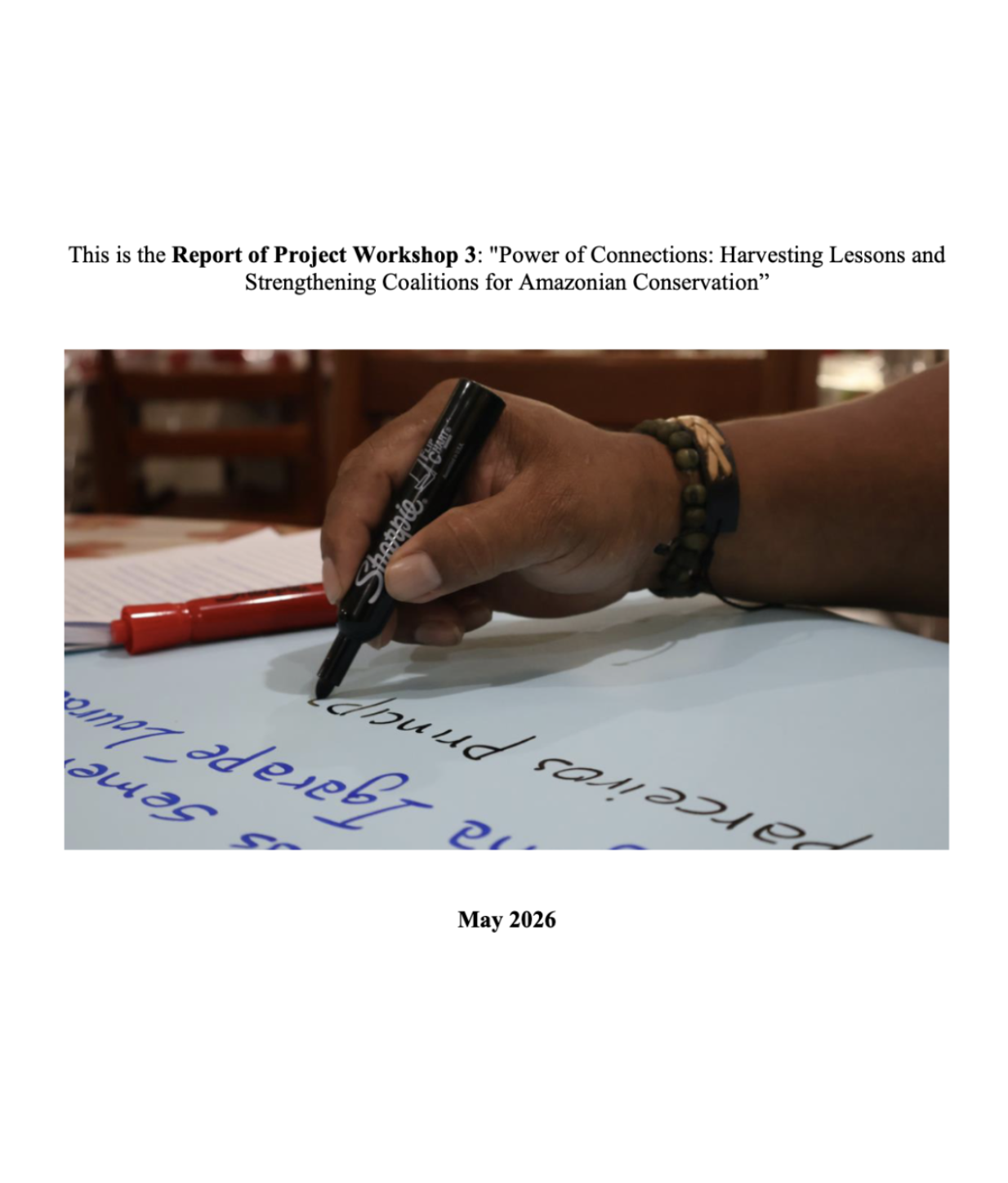
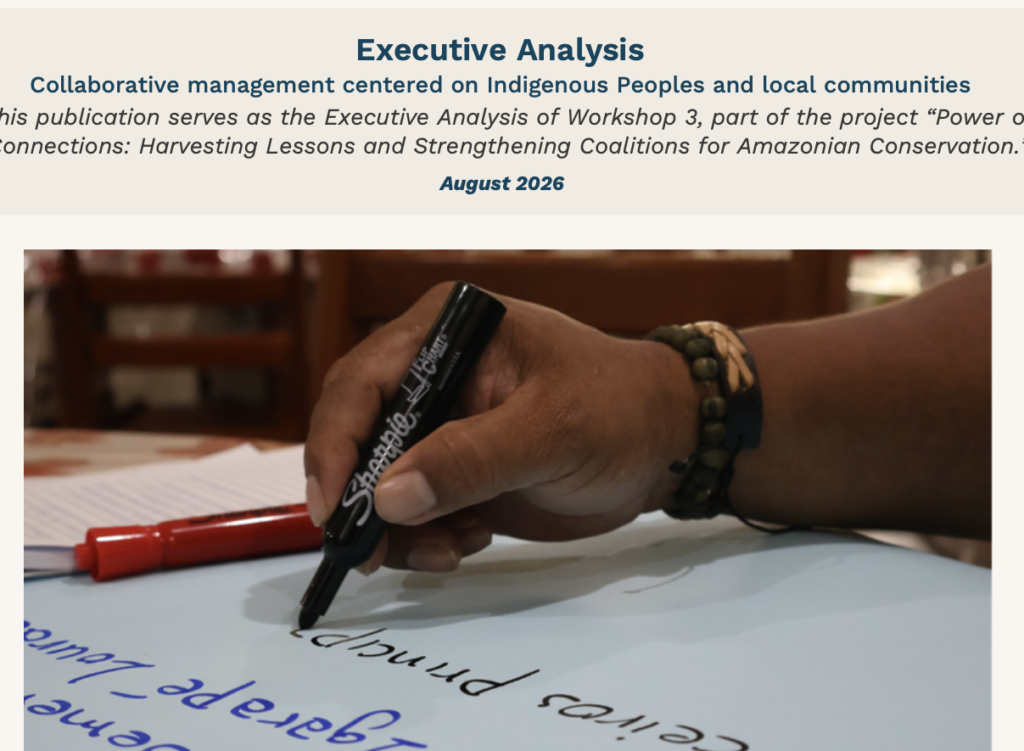
This document brings together the debates and reflections of the participants of the workshop “Collaborative Management Centered on Indigenous Peoples and Local Communities,” held from September 1 and 4, 2025 in Manaus, Brazil.
Key messages: Lessons for effective collaborative management in the Amazon
1. Conservation is relational: Conservation is not merely the protection of nature. It is the cultivation of healthy relationships between humans and the living world. Ecosystems endure where relationships of reciprocity, respect, and mutual responsibility remain intact.
2. Communities as protagonists, not beneficiaries: Effective collaborative management requires that Indigenous Peoples and local communities be decision-makers, knowledge holders, and co-creators of territorial solutions.
3. Shared responsibilities create shared benefits: Clear roles, mutual accountability, and equitable distribution of costs and benefits strengthen long-term commitment among co-management parties.
4. Trust and relationships are built over time: Collaboration depends on trust built through sustained engagement, transparency, reciprocity, and continuous interaction over time.
5. Territorial rights and governance create conservation conditions: Secure land rights, functional institutions, and culturally appropriate governance structures create enabling conditions for effective collaboration and conservation.
6. Knowledge co-production and mutual learning: Integrating Indigenous, local, and scientific knowledge systems improves decision-making, strengthens legitimacy, and generates more relevant solutions.
7. Inclusion and intergenerational participation: Meaningful participation of women, youth, and diverse community voices strengthens governance systems and long-term resilience.
8. Livelihoods and conservation as complementary goals: Conservation efforts are more sustainable when they also strengthen local economies, cultural values, and territorial stewardship.
9. Adaptive and continuous processes: Collaborative management is not a fixed model, but an ongoing process of learning and adaptation to changing social and environmental conditions.
Publisher
UF’s Power of Connections Project
Publication
August 2026
Authors
Zapata-Ríos, G.; Campos-Silva, J.; Espin, J.; Kainer, K.; Luna, V.; Dain, J.; Espada, A.L.V.; Melo Futada, S.; Mello, D.; Loiselle, B. & Useche, P.
Language
English
Here are the Spanish and Portuguese versions.
Keywords
Pan-Amazonia; co-management; community management; biocultural conservation; local knowledge; collaborative governance
Here is the complete Report